What does it take to create lasting equity-centered change in academic institutions? How do institutions sustain that work when leadership, priorities, resources, and political conditions continue to shift?
These are not hypothetical questions. They reflect the realities faced by seven schools and programs of public health participating in TAE to pursue institutional transformation. Over four years, these institutions pursued their own visions for equity-centered transformation, each navigating different histories, strengths, challenges, and levels of readiness for change. Their journeys were not always straightforward, and what progress looked like often evolved along the way. Yet, despite these differences, common lessons emerged about what it takes to advance and sustain equity within complex academic systems.
Drawing on our internal evaluation and learning of TAE, we identified Seven Adaptive Principles for Equity-Centered Institutional Change . Grounded in the experiences of those doing the work, these principles offer practical guidance for academic leaders, faculty, staff, and others working to create meaningful and lasting institutional change.
Learning from the Journey, Not Just the Outcomes
When TAE began, the goal was not to simply introduce new programs or policies. It was to create the conditions to support institutions in rethinking how equity, diversity, inclusion, and belonging (EDIB) could become part of their leadership, decision-making, structures, and everyday practices. The initiative encouraged institutions to bring diverse voices into the change process, engage leadership, assess their institutional environments, and identify priorities that reflected their unique contexts
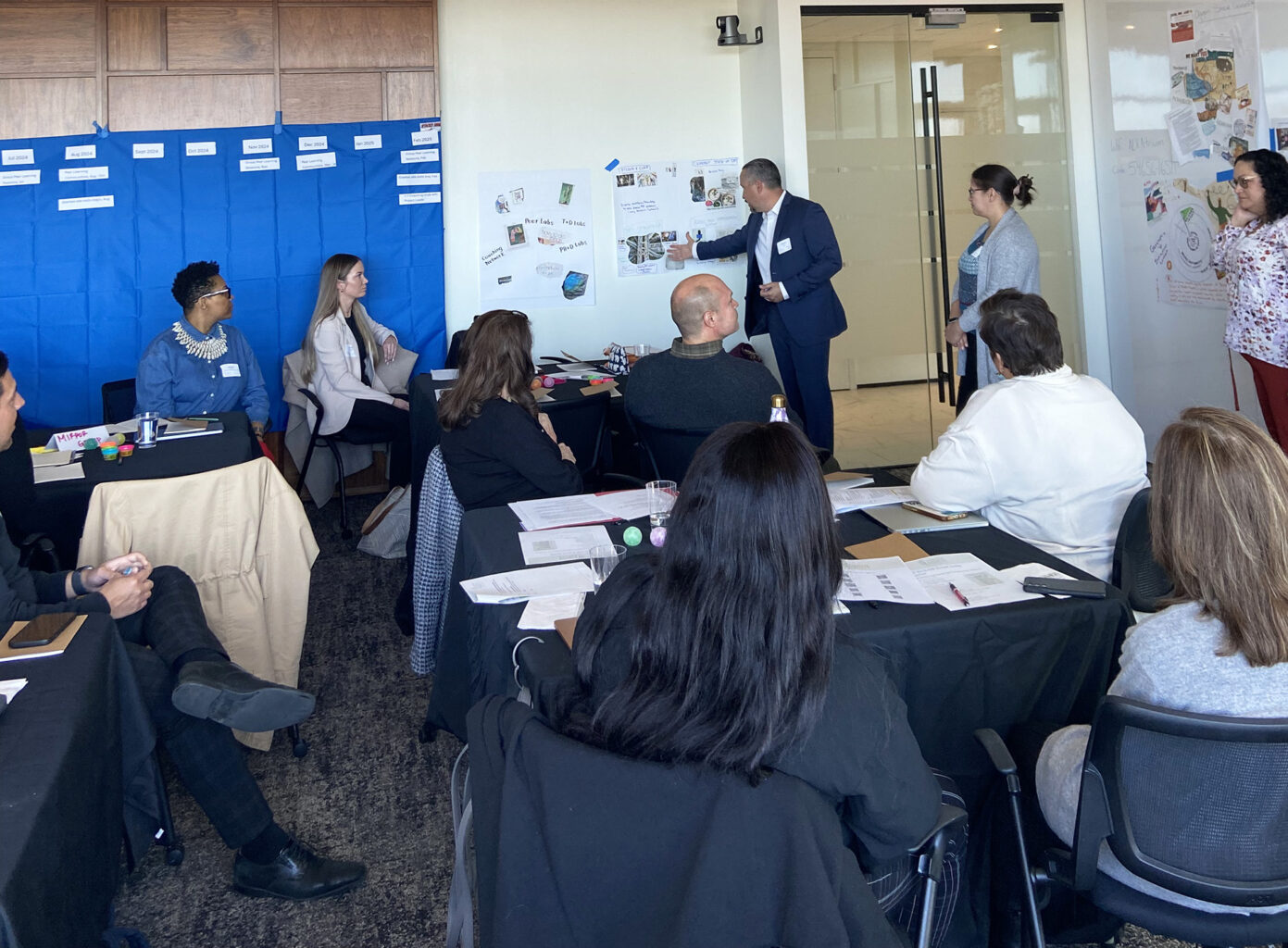
Through Guiding Teams, institutional assessment, strategic planning, and a shared learning community participating schools and programs worked towards their visions of transformation.
But as the work unfolded, one thing became increasingly clear: institutional or systemic transformation does not happen in a predictable sequence, and progress does not always look the way we initially expect.
Some institutions entered TAE with established equity efforts and relationships, while others were still building the foundations needed to move the work forward. Teams navigated leadership transitions, competing institutional priorities, shifting political conditions, and different levels of engagement and readiness. Even within the same institution, understandings of what equity-centered transformation could and should look like changed over time.
These experiences challenged the idea that institutional change can be measured only against a predetermined set of outcomes. They also reinforced an important lesson: Advancing equity requires institutions to continually learn, adapt, and find ways to move forward that respond to their changing circumstances while remaining grounded in their broader vision for transformation.
How the TAE Evaluation Helped Us Identify the Seven Principles
So, how do we understand progress when the path to institutional change is constantly evolving? This question shaped how we approached TAE’s internal evaluation.
Rather than focusing solely on whether institutions achieved their original objectives, we wanted to understand how change actually happened. What helped teams build relationships and sustain momentum? How did they navigate resistance or uncertainty? What happened when their original strategies no longer fit their circumstances? How did their visions for equity-centered transformation evolve through the process?
Our evaluation explored these questions through conversations with grantee teams and the Adaptive Change Specialists (ACSs) who supported each institution. We also examined how the TAE Coordinating Center and ACSs helped institutions navigate adaptive challenges, strengthen their capacity for change, and learn from one another.
These conversations offered insights into the experiences behind institutional transformation: the relationships that made progress possible, the challenges that required teams to reconsider their approaches, the decisions that shaped their direction, and the learning that emerged along the way.
As we examined these experiences across the seven institutions, we began to see recurring patterns. Although each institution’s journey was unique, common approaches emerged that helped teams navigate complexity, adapt to changing conditions, and continue advancing their work.
These patterns became the foundation for the Seven Adaptive Principles for Equity-Centered Institutional Change.
The principles are not intended to be a step-by-step formula or a universal roadmap. Instead, they reflect lessons from the experiences of institutions working through the opportunities, tensions, and uncertainties of equity-centered change. Together, they offer a way for others to reflect on their own institutional contexts, consider different approaches, and strengthen the conditions that make meaningful and sustainable transformation possible.

Seven Adaptive Principles for Navigating the Messy Reality of Equity-Centered Institutional Change
What helps institutions keep moving toward equity when the path forward is uncertain, progress is uneven, and the conditions around them keep changing?
Across seven institutions and four years of learning, we found that meaningful change was not driven by a single strategy, charismatic leader, or perfectly executed plan. Instead, it depended on a set of interconnected practices that helped teams navigate complexity, build collective commitment, and adapt along the way.
Here are seven principles that emerged from their experiences and what they mean for anyone working to transform an academic institution.
- Meet Your Institutional Unit Where It Is and Build Forward. Understand your institution’s history, culture, strengths, challenges, and readiness for change before determining how to move forward.
- Invest Time in Relationships. Build authentic relationships and trust that help people navigate challenges, sustain commitment, and work toward change together.
- Create a Shared Purpose and Balance Flexibility. Stay grounded in a collective vision while adapting strategies as circumstances, opportunities, and learning evolve.
- Share Leadership and Garner Institution-Wide Support. Engage students, faculty, staff, leaders, and community partners in meaningful ways that strengthen shared ownership and commitment.
- Create Structures That Support Learning and Adaptation. Establish intentional spaces and processes for reflection, collaboration, experimentation, and continuous learning.
- Redefine What Progress Looks Like. Recognize that stronger relationships, increased trust, expanded leadership, and shifts in institutional culture are meaningful signs of transformation.
- Institutionalize What Matters. Embed equity into institutional policies, practices, resources, and everyday decision-making so that change can continue beyond individual initiatives or funding opportunities.
Together, these principles challenge a familiar assumption: that institutional transformation is about developing the right plan and following it to completion. Instead, they point to the importance of building relationships, shared commitments, learning structures, and adaptive capacity that allows the individuals guiding this work to be flexible and persistent.
What Does This Mean For Your Institution?
There is no universal roadmap for equity-centered institutional change. If there were, the work would be much simpler.
The seven TAE institutions started in different places, encountered different barriers, and pursued different strategies. Some had established foundations for equity work, while others were still building the relationships, trust, and institutional support needed to move forward. What worked in one setting did not necessarily work in another.
Yet across these varied experiences, we saw common practices that helped teams navigate challenges and create conditions for meaningful change.
The takeaway is not that every institution should follow the same path. It is that every institution can be more intentional about how it approaches the journey.
Whether your institution is just beginning to explore equity-centered transformation, struggling to maintain momentum amid resistance or uncertainty, or working to sustain progress already made, these principles offer a way to reflect on where you are and what might help you move forward.
They also invite us to ask different questions about success. Are more people able to influence decisions? Are relationships becoming stronger? Are teams learning from challenges rather than simply pushing through them? Are equity-centered practices becoming part of how the institution operates?
These questions matter because some of the most important signs of transformation appear long before they become visible in formal institutional outcomes.
Where Do YOU Go From Here?
Four years of TAE implementation and evaluation reinforced something important: equity-centered institutional change is not a one-time initiative or a destination institutions simply arrive at. It is ongoing work that requires relationships, shared leadership, reflection, adaptation, and sustained commitment.
The Seven Adaptive Principles for Equity-Centered Institutional Change offer a starting point for reflecting on that work and identifying opportunities to strengthen it.
But understanding the principles is only part of the journey. The real question is: What might they help you do differently in your own institution?
If you are beginning this work, navigating a difficult challenge, or looking for ways to re-energize existing efforts, you do not have to figure it all out on your own. Through TAE’s Collaborative Consultation model, you can connect with experienced Adaptive Change Specialists who can serve as thought partners as you explore challenges, identify opportunities, and consider practical next steps.
Explore TAE’s Collaborative Consultation opportunity and share your interest.
Institutional transformation may not come with a clear roadmap, but there is much we can learn from those navigating similar journeys. We hope these principles inspire you to reflect on what is possible, build on what is already working, and find new ways to move equity-centered change forward.