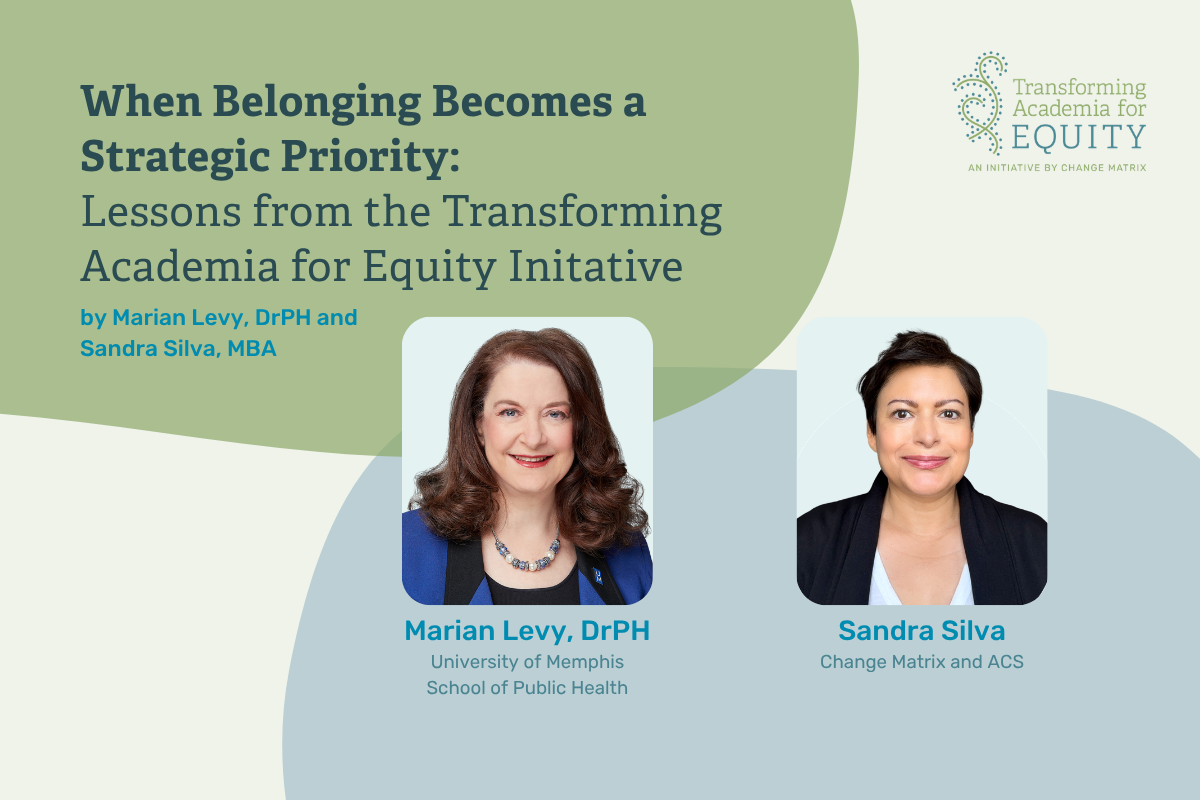
What does it take to create a school where every student, faculty member, and staff member feels valued, supported, and connected? For many schools of public health, the answer goes beyond recruitment and representation – it requires intentionally building a culture of belonging. Yet, many institutions continue to grapple with how to translate these commitments into meaningful action.
The Transforming Academia for Equity (TAE) initiative, funded by the Robert Wood Johnson Foundation (RWJF) and led by Change Matrix, helps schools or programs of public health advance equity and create environments where historically underrepresented scholars can thrive. Through funding, technical assistance, adaptive change principles, peer learning, and institutional support, TAE provides support and tools to seven schools or programs of public health to move from commitment to action.
One of those institutions putting those principles into practice is the University of Memphis School of Public Health (SPH). Since joining TAE in 2022, the school has taken deliberate steps to strengthen belonging across its community. Its experience offers valuable lessons for other schools seeking to foster more inclusive and supportive academic environments.
Turning Commitment into Action
Like many institutions, the University of Memphis SPH recognized that creating the conditions for ‘belonging’ is essential to student success, employee wellbeing, and organizational excellence. The work undertaken through TAE was closely aligned with the University of Memphis SPH’s 2023–2028 Strategic Plan, a key factor in securing leadership support and sustaining momentum. The plan emphasizes fostering a supportive and inclusive environment for students, staff, and faculty. Rather than functioning as a stand-alone initiative, TAE became a vehicle for advancing the school’s broader commitment to belonging and community. This alignment ensured that belonging and inclusion efforts supported broader institutional priorities and were positioned for long-term sustainability.
The question became: How do you build belonging in meaningful and measurable ways? The school’s approach centered on three interconnected strategies:
- Supporting historically underrepresented students
- Listening to the community through data and dialogue
- Creating shared ownership for institutional change
Supporting Students Through Community and Mentorship
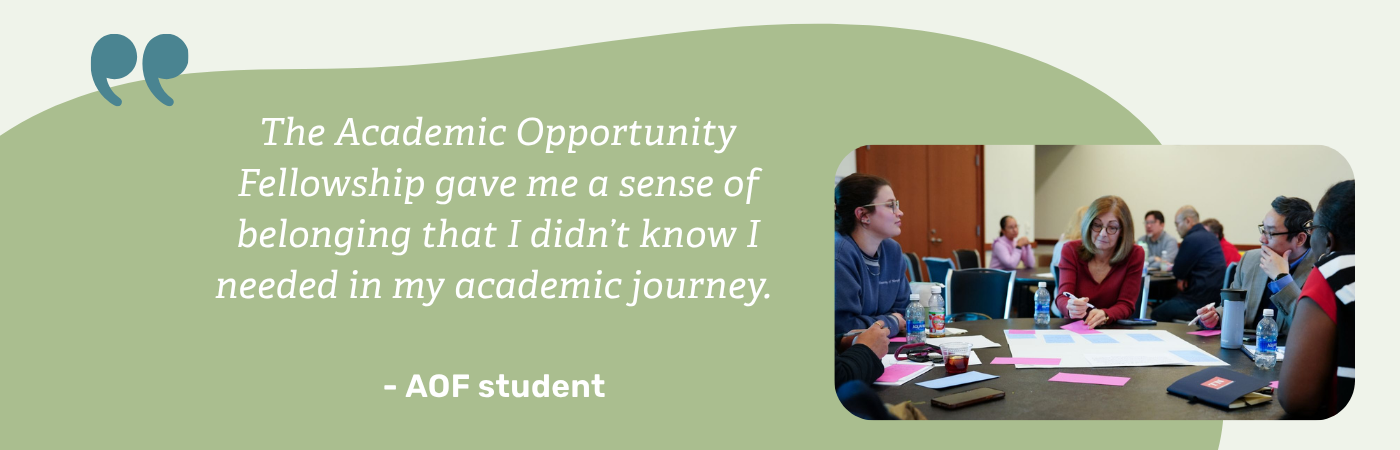
One of the earliest efforts focused on strengthening support for graduate students through the Academic Opportunity Fellows (AOF) Program. Designed for master’s and doctoral students from historically underrepresented backgrounds, the cohort-based program provides mentorship, professional development opportunities, and peer support. Beyond helping students develop academic and professional skills, the program creates meaningful connections among participants and fosters a stronger sense of community. By intentionally investing in student relationships and support networks, the school reinforced an important message: belonging begins with connection. The success of this program is felt by the ongoing engagement from program alumni who have engaged as mentors after their graduation.
Using Data as a Catalyst for Change
Creating a culture of belonging requires more than good intentions; it requires understanding people’s experiences, needs, and aspirations. To capture this feedback, the school administered a climate survey to students, faculty, and staff to identify priorities and inform a series of workshops. The survey served as both a measurement tool and a listening mechanism, helping leaders identify strengths, challenges, and emerging priorities across the school community.
The workshops focused on strengthening cultural proficiency, emotional intelligence, and cross-cultural understanding through guided reflection and dialogue. The goal was not simply to discuss inclusion, but to create opportunities for meaningful reflection on cultural identities and interpersonal dynamics while developing skills for engaging across differences with empathy and respect.
From Awareness to Action
As the work matured, the focus shifted from individual awareness to institutional change. In fall 2025, faculty and staff used climate survey findings and other feedback methods to identify opportunities for strengthening inclusion across the school. The conversation continued in 2026 with a workshop focused on translating insights into action, exploring practices that foster belonging, and examining the role each individual plays in creating an inclusive community. Across these discussions, several themes consistently emerged, including respect and acknowledgment, teamwork and collaboration, inclusivity and equality, open communication, and community support. These themes became shared priorities for strengthening the school’s culture moving forward.

Five Lessons for Building a Culture of Belonging
The University of Memphis SPH’s experience demonstrates that fostering a culture of belonging is not the result of a single program or initiative, but an ongoing process that requires institutional commitment, community engagement, and sustained action. Through the TAE initiative, the school combined student support programs, climate assessment, facilitated dialogue, and collaborative action planning to create opportunities for students, staff, and faculty to shape the culture of the institution.
While every institution’s starting point and journey is unique, several lessons emerged from the University of Memphis SPH’s experience transforming its academic system to be more equitable:
- Commitment from leadership and aligning equity goals in strategic plans transforms belonging from an initiative into an institutional priority.
- When communities help identify what needs to change and shape the solutions, they develop a sense of ownership and become invested in supporting change.
- Thoughtfully structured dialogue builds trust, strengthens relationships, and creates space for diverse perspectives to be heard.
- While data can identify priorities, meaningful change occurs when institutions actively engage their communities in responding to what the data reveal.
- There is no finish line for belonging work – building an inclusive culture requires continuous listening, learning, adaptation, and investment over time.
Sustaining the Work
At the University of Memphis School of Public Health, sustainability has been a priority from the outset. Efforts to foster belonging have been integrated into orientations for new students, faculty, and staff. Ongoing workshops continue to provide opportunities for reflection, learning, and community building. By embedding belonging into institutional structures, policies, and everyday practices, the school has worked to ensure that progress continues beyond the lifespan of any single initiative.
As schools of public health navigate challenges related to enrollment, funding, workforce development, and student wellbeing, creating environments where people feel valued, heard, and connected remains more important than ever. The University of Memphis SPH’s journey demonstrates that belonging is not created through a single program or event – it is built through intentional leadership, meaningful engagement, continuous learning, and shared responsibility. For schools of public health, fostering inclusion and belonging strengthens institutional culture, creates environments where individuals can thrive, and is essential to preparing the next generation of public health leaders.