“You never know who might stop by.”
My mother said it so often it stopped sounding like a guess and started sounding like a rule. She’d already be elbow deep in a pot sized for twelve, cooking for a table of six. My mom and her sisters, caretakers who came to this country with love, hope, and enough determination for three futures, cooked like reinforcements were always on the way. I thought, for a long time, that this was about the food.
It was about the door. At every birthday party of my childhood, someone spotted you before you were all the way inside: “¡Te estábamos esperando!” (You’re here! We were waiting for you). The plate was already out. Nobody checked whether there was room, because room had already been built into the plan before anyone knew who would need it.
I also knew what “La Migra” (Border Patrol) meant before I understood the weight behind it. If someone yelled it, I knew what to do: go quiet, behave, make myself small, until it felt safe again. There was a gentler version outside the house too, shine enough to be noticed, never enough to be a target. Same child, same week, opposite instructions. In one room, my arrival had been planned for. In the other, safety meant nobody noticed I had arrived at all.
For Hispanic Heritage Month, that contrast is what I keep coming back to. Much of my adulthood has gone into sorting through it: which lessons came from care, which came from survival, and which ones I’m still following without realizing it.
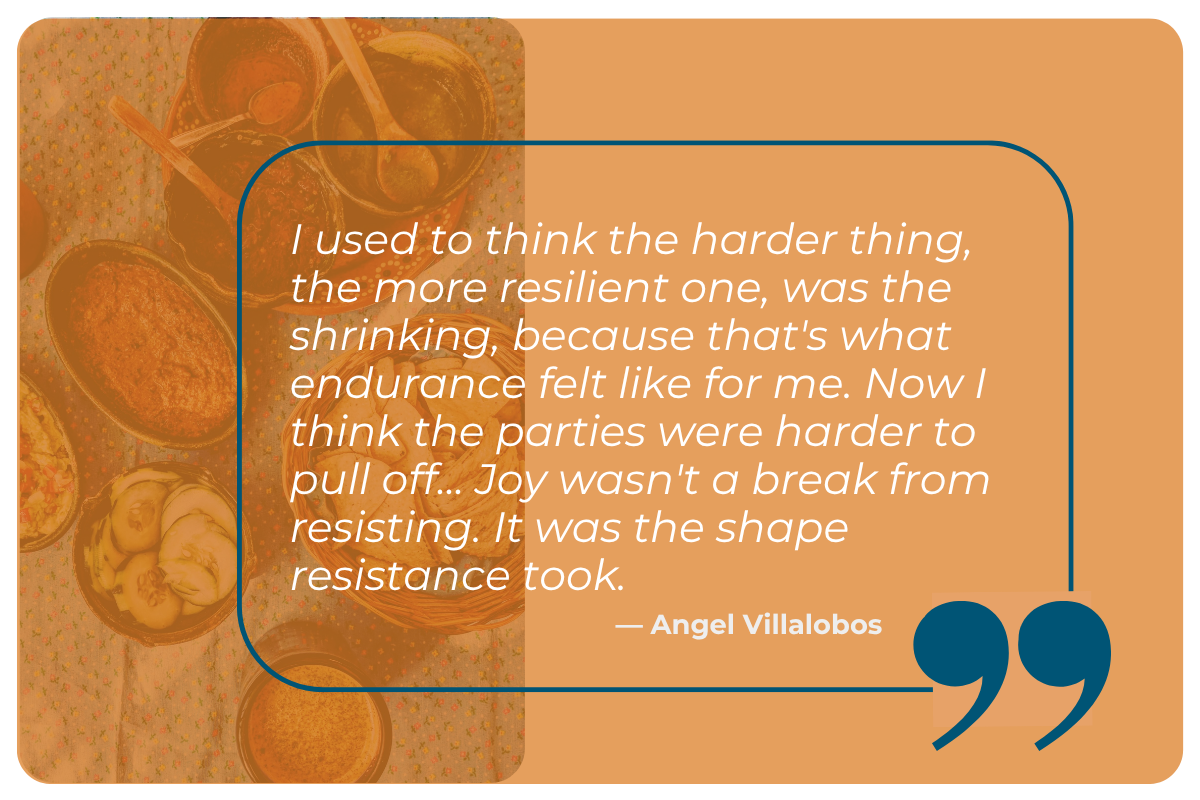
That sorting changed what resilience and resistance mean to me. I used to think the harder thing, the more resilient one, was the shrinking, because that’s what endurance felt like for me. Now I think the parties were harder to pull off. Cooking for guests who might not come, singing anyway, keeping a chair open in a house where fear could knock at any moment; that’s a refusal to let survival be the only thing life gets to be about. Joy wasn’t a break from resisting. It was the shape resistance took.
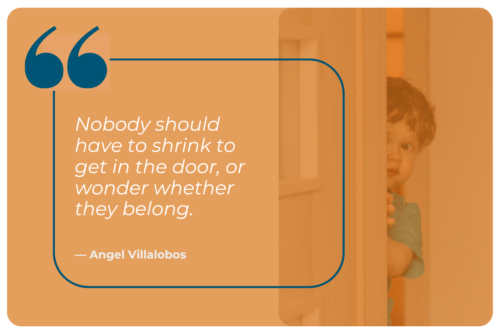
That’s most of what I try to do as an evaluator. I think about whether our questions make sense to the people we’re asking, whether someone can say what they actually think without it costing them something, and whether what we learn comes back in a form communities can use and push back on. In practice that looks small: changing a question, meeting people where they already gather, using a metaphor instead of a technical term. Nobody should have to shrink to get in the door, or wonder whether they belong.
That feels especially true right now, when so many people are being asked to do what I learned to do as a child, and are getting through it the way my family did: together, on purpose. So, I am working to keep the plate ready. When someone near you seems lost, afraid, or unsafe, let them know their space is set, that you’re glad they’re here, and that you were expecting them all along.
September is also Suicide Prevention Month. If you or someone you know needs emotional support or is in crisis, call or text 988 to reach the 988 Suicide & Crisis Lifeline. Support is free, confidential, and available 24/7, with Spanish-language support also available.