

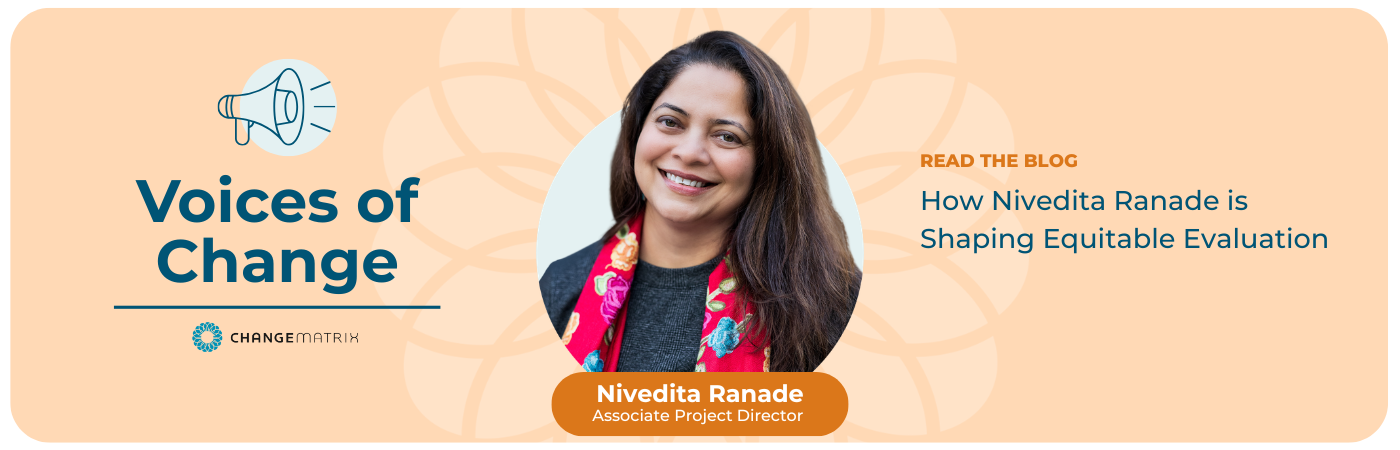
For too long, evaluation has asked the wrong question: What is wrong with this community? As a culturally responsive and equitable evaluator, I start with: What is strong about this community, and what does this community need to further thrive?
At a time when equity and justice are being challenged, narrowed, and in some cases actively dismantled, this shift is not just important; it is critical. The way we define, measure, and act on knowledge shapes whose voices are valued and whose are erased. Evaluation is not neutral. It can reinforce harm or help build a more just future.
That shift changes everything I do.
I design evaluation processes where communities share power and define success on their own terms. I begin this work with a strong foundation: community agreements. They are not a formality; they are essential. They establish how we engage with each other, how we share stories, and who holds and owns the data. They create clarity around consent and accountability and help prevent the harms of extractive research and evaluation, like misrepresentation, tokenization, and broken trust. With these agreements in place, the work remains grounded, and communities continue to have agency. They are the drivers and the decision-makers. Their contributions are acknowledged and compensated, because lived experience is expertise, not a free resource.
I recognize that lived experiences are not just data points. Numbers alone cannot capture trust, cultural nuance, or the quiet, long-term ways communities build strength. Together, I work with communities to ask better questions—ones grounded in lived realities. We expand what “counts” to include belonging, cultural relevance, and collective well-being. We re-envision how knowledge is gathered. Not everything belongs in a survey. Storytelling, listening sessions, and community dialogue are not supplementary; they are central to my culturally responsive and equitable approach. They create space for people to share in natural, layered, and authentic ways.
When working across languages and cultures, I build in interpretation and accessibility from the start, not as an afterthought. Listening to elders in the community is another anchor of my work. Their voices carry history, context, and wisdom that no dataset can replicate. They remind us that today’s challenges are deeply rooted, and that meaningful solutions must be as well.
At its core, this work is a matter of justice. Communities deserve ownership over their stories: how they are told, where they are shared, and what they influence. That is why I prioritize returning findings in ways that are accessible, relevant, and actionable. Because this work is not just about measuring outcomes. It is about shifting power, honoring voice, and building pathways to strength and success—defined and led—by communities themselves.
