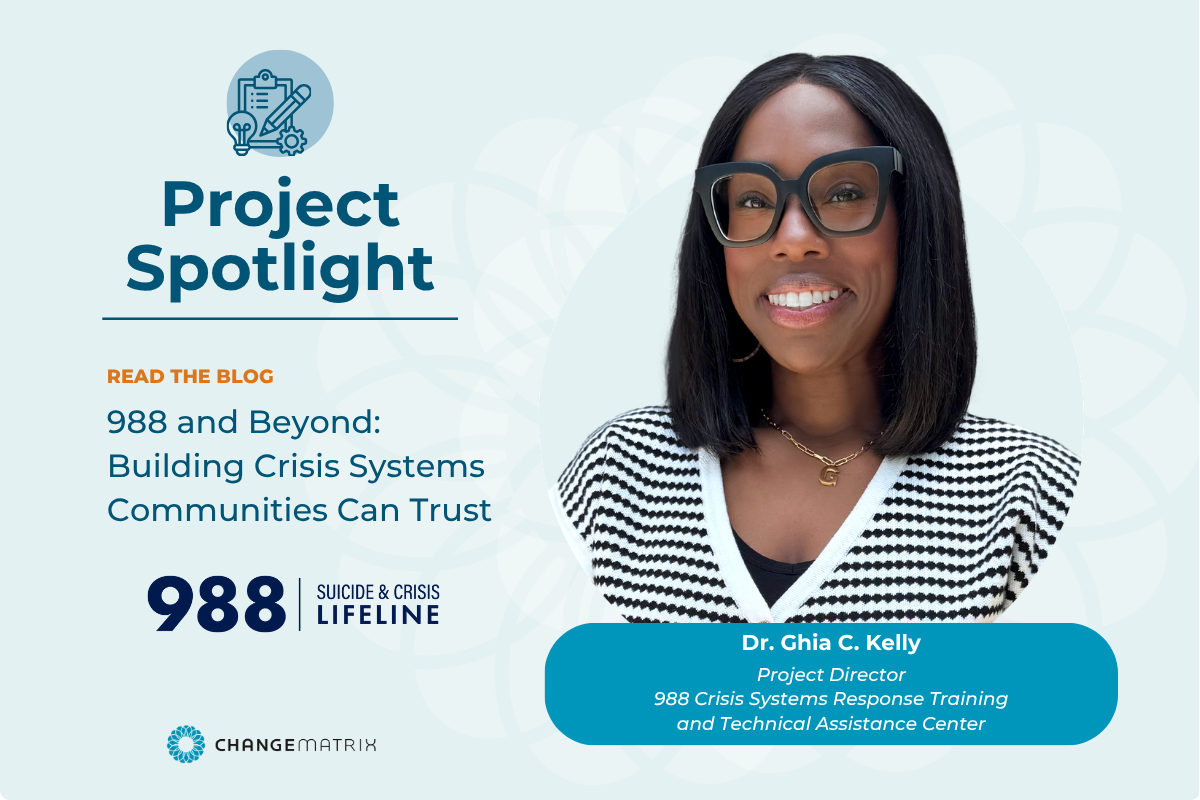
September is Suicide Prevention Month, a time when we are reminded of the importance of connection, hope, and ensuring that people know where to turn when they or someone they love is in crisis. Since its launch in 2022, the 988 Suicide & Crisis Lifeline has created an easier way for people experiencing behavioral health crises to connect with support. But as I step into my new role as Project Director of the 988 Crisis Systems Response Training and Technical Assistance Center (CSR-TTAC), I am reminded that our work is about much more than a three-digit number. It is about helping communities build a system of care around that number that is accessible, responsive, and tailored to the unique needs of the community it is designed to serve.
The CSR-TTAC supports states, territories, tribes, tribal organizations, crisis providers, and community partners as they strengthen behavioral health crisis systems across the country. Through training, technical assistance, resources, and opportunities for shared learning, we help communities move toward systems where people have someone to contact, someone to respond, and a safe place to receive help when a crisis occurs.
At the community level, that matters tremendously. A person experiencing a behavioral health crisis should not have to understand a complicated service system to receive help. Families should not have to figure out, in their most vulnerable moments, who to call or where to go. And a person’s race, age, geography, disability, language, income, or other circumstances should not determine the quality of care they receive. Our work is to strengthen the system so that communities’ needs are centered, and providers are equipped, trusted, and supported.
Over the past year, I have had the opportunity to see this work up close, supporting states and communities through technical assistance in building stronger crisis response systems. One example of our progress is the 2026 Crisis Systems Design Policy Academy, which brought together multidisciplinary teams to create a shared vision, clarify roles, develop goals, and apply systems-design approaches to improving crisis response in their state. Beyond any single strategy, efforts like this reinforce that strong crisis systems are built through relationships. They require collaboration across 988, 911, mobile crisis, behavioral health providers, first responders, policymakers, community-based organizations, and most importantly, the people and families who rely on these systems.
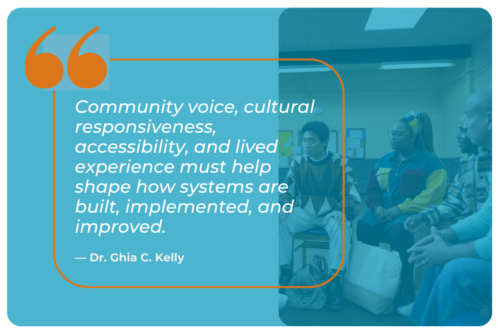
This is especially important for communities that have historically been underserved or have reasons to distrust traditional systems of care. Community voice, cultural responsiveness, accessibility, and lived experience must help shape how systems are built, implemented, and improved. Our work must continually ask not only, “Does the system work?” but also, “For whom does it work and who might we still be missing?”
As I continue to lead the CSR-TTAC work, one of my priorities is to deepen that connection between systems and communities. This aligns with the Change Matrix Collaborative Approach. We want our training and technical assistance to respond to what the field is experiencing in real time while helping communities move from fragmented crisis services toward coordinated systems of care. That means continuing to strengthen partnerships, elevate promising practices, support the crisis workforce, and create opportunities for communities to learn from one another.
During Suicide Prevention Month, I encourage each of us to think beyond awareness toward action. Share 988. Learn what happens when someone contacts 988 in your community. Become familiar with your local mobile crisis and crisis stabilization resources. And if you are part of an organization or system working to improve behavioral health crisis response, connect with us.
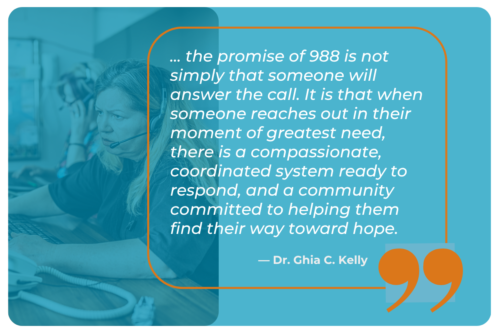
Because ultimately, the promise of 988 is not simply that someone will answer the call. It is that when someone reaches out in their moment of greatest need, there is a compassionate, coordinated system ready to respond, and a community committed to helping them find their way toward hope.
If you or someone you know needs support, call or text 988, or chat at chat.988lifeline.org. Spanish-language services are available by calling 988 and pressing 2, or by texting AYUDA to 988.